A few years ago, two students from the same batch walked across the same stage at convocation. Their marksheets were almost identical. Today one is playing a leading role at a good firm while the other is still looking for the next best opportunity and surprisingly, that student cannot define the "best".
Management students aspire to successful careers, but grades always cant guarantee employment. Career guidance and employability training develop problem solving, team building, leadership qualities employers increasingly seek for professional success story.
Career guidance was never meant to tell a student which profession to pick. It helps them notice what they were already good at.
Guidance Is a Compass, Not a Map
Career guidance doesn't help to choose a right occupation; it supports students to discover their strengths and interests, bridging the gap between their interests and actual employment options available is always a critical stage in their career development.
Where Guidance Meets Employability
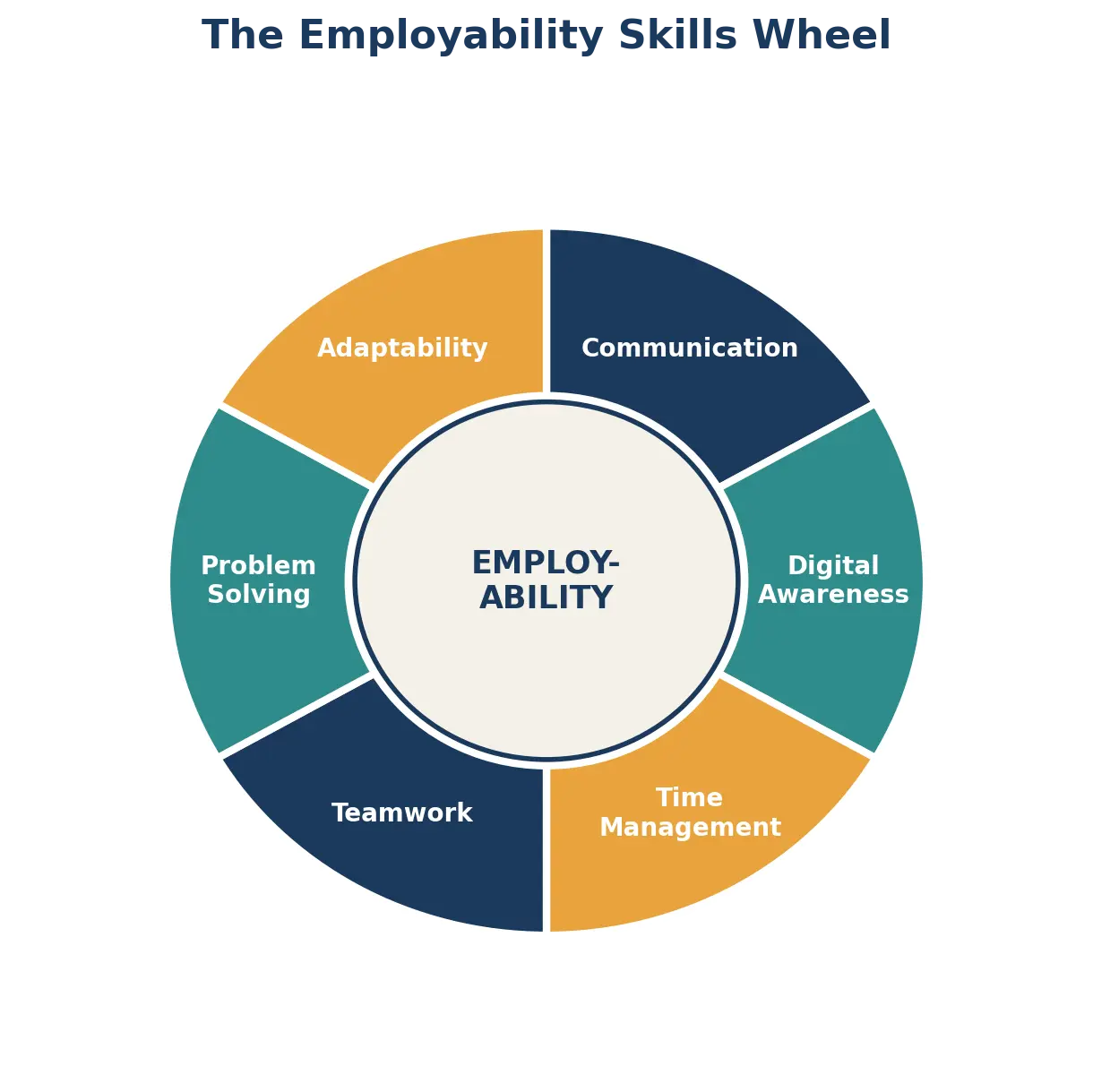
Career guidance must be supported by training on employability skills, which prepare students for the job. Employers always emphasize on communication, digital awareness, time management, and teamwork, all of which contribute to students' academic insight and career preparation.
A Tale of Two Students
Placement results for two students with similar grades can differ. Beyond the classroom, real-world skills are developed through internships, certifications, and extracurricular activities. Recruiters usually pick students whose learning outside of the classroom shows superior workplace readiness, even when the grades are moderate.
Small Steps, Built From Day One
Career planning begins on day one through internships, leadership roles, live projects, business awareness, and professional networking. Institutes must continuously provide corporate interactions, mock interviews, aptitude training, and counselling to translate classroom learning into practical skills that bridge the gap between education and industry requirements.
Staying Employable as the Ground Shifts
Technology continues to change often quicker than curriculum. This fundamentally means that lifelong education is now the norm. Students who stay curious, pick-up new tools, rather than waiting to be taught, and work on it. Not because they predicted it, but because they had developed the practice of adapting.
Final thought
The Takeaway
Nobody creates a career in a single semester. It comes progressively, via consistent sweats repeated over years, a few reasonable judgments, and enough humbleness to keep learning after the degree is accomplished, it allows a student to acquire a job; also, the student can shape someone who can keep growing long after the initial offer letter arrives.
References
- Brewer, L. (2013). Enhancing youth employability: What? Why? and how? Guide to core work skills. International Labour Office, Skills and Employability Department. View source (opens in a new tab)
- Ministry of Human Resource Development, Government of India. (2020). National Education Policy 2020. View source (opens in a new tab)
- National Association of Colleges and Employers. (2024). Career readiness: Competencies for a career-ready workforce. View source (opens in a new tab)